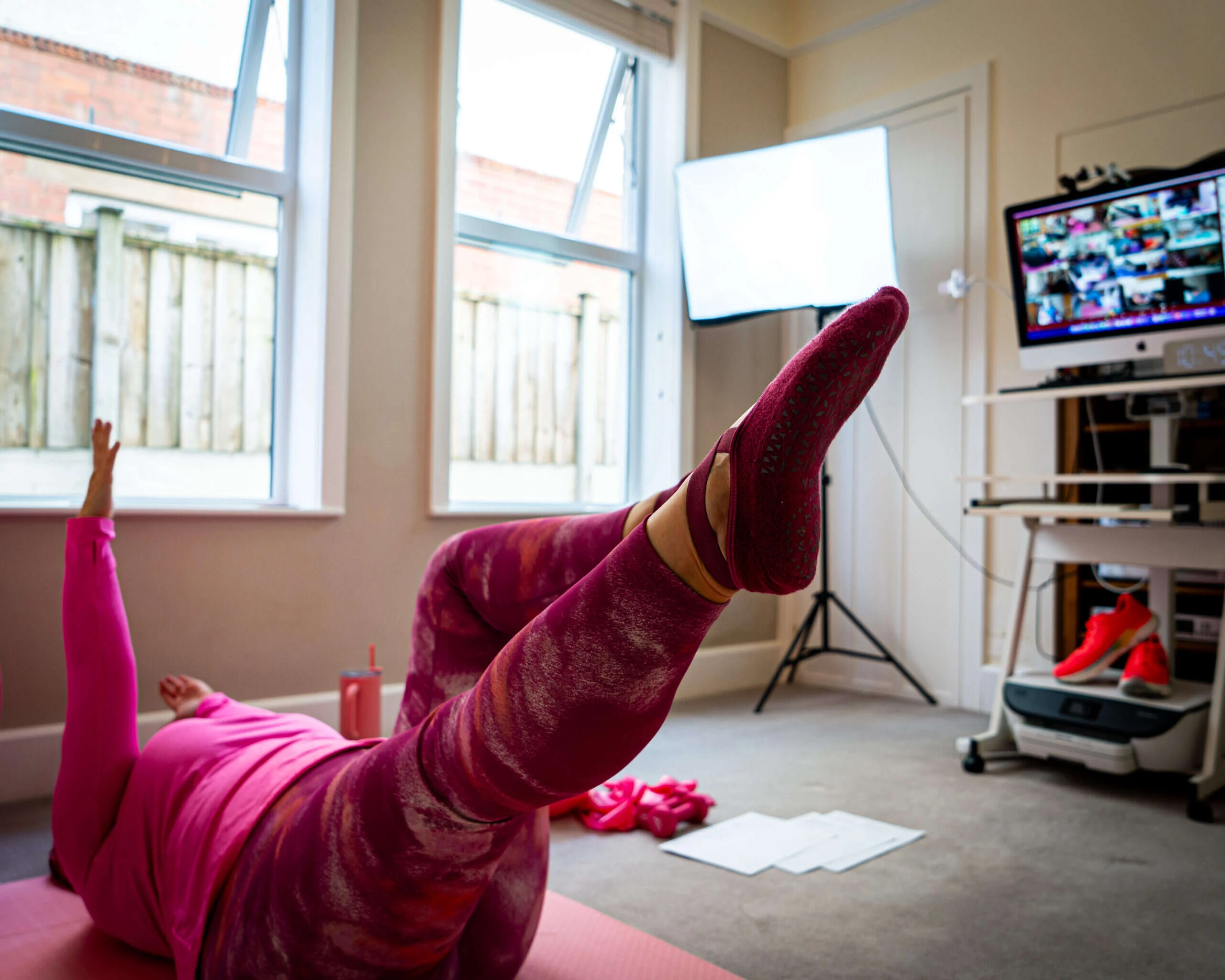
Why Mixed Ability?
Mixed Ability is one of Mobilates’ more traditional Pilates classes — but with a modern twist.
Bringing together familiar Pilates exercises, flowing movement and contemporary variations, the class gives participants the opportunity to develop strength, mobility, stability, balance and body awareness while working at a level that feels appropriate for them.
And that’s really where the “mixed ability” part comes in.
It doesn’t mean that everyone in the class is expected to do the same exercise in exactly the same way. Different options, adaptations and progressions allow participants to explore movements at their own level, whether they’re relatively new to Pilates or have been practising for some time.
You might choose to keep an exercise simple and focus on control and movement quality, while somebody else explores a progression. On another day, you might make a completely different choice yourself. There isn’t one version that everyone needs to work towards.
Mixed Ability also draws on Pilates’ traditional roots. Many of the exercises and movement patterns we practise today can be traced back to the original work of Joseph Pilates, although Pilates has continued to develop considerably since then.
That combination of traditional Pilates and modern, adaptable practice is at the heart of Mixed Ability.
What is Pilates?
Pilates is a form of mind-body exercise that focuses on controlled movement, strength, stability, mobility, posture and breathing. Although there are now many different styles of Pilates, they all have their roots in the work of Joseph Pilates.
Joseph Pilates originally called his method Contrology, reflecting his belief in purposeful, controlled movement and the connection between the mind and body.
In 1945, Joseph Pilates and William John Miller published Return to Life Through Contrology, which included a sequence of 34 original mat exercises.
Pilates Then…
Want to see where some of the exercises you do in class came from?
Take a look at this fascinating footage of Joseph Pilates’ original mat work and see how many movements you recognise.
Some may look surprisingly familiar. Others might make you think, “We definitely don’t do it quite like that!”
And there’s a good reason for that.
…and Pilates Now
Pilates has continued to develop since Joseph Pilates created his original method.
We now have decades of additional research and a much greater understanding of anatomy, biomechanics, exercise, rehabilitation and the different factors that can affect how people move. Pilates itself has also become the subject of scientific research, including studies involving people with a range of health and musculoskeletal conditions.
As our knowledge has developed, the way exercises are approached and taught has developed too.
That doesn’t mean Joseph Pilates’ original exercises were simply “wrong”, or that we need to leave traditional Pilates behind. Instead, modern instructors can draw on the original repertoire while also using current knowledge to think about how an exercise is prepared for, taught, adapted and progressed.
An exercise might be broken down into smaller stages. The starting position or range of movement might change. Support or equipment might be introduced. Or we might explore a contemporary variation while retaining the movement principles behind the original exercise.
The aim isn’t necessarily for everybody to recreate an exercise exactly as Joseph Pilates performed it.
It’s to understand what we’re trying to achieve through the movement and find an appropriate way of exploring it.
And that combination of traditional Pilates with a modern twist is at the heart of Mixed Ability.
What to Expect in a Mixed Ability Class
Mixed Ability is a full-body Pilates class combining traditional Pilates exercises with contemporary movements, variations and progressions.
Throughout a session, you may move through a variety of positions including standing, seated, lying on your back or side, and working on all fours. Exercises are brought together to create a flowing class that develops strength, core stability, mobility, balance, coordination and body awareness.
Some weeks may have a particular focus or theme. You might spend more time exploring an area of the body, revisit the foundations of familiar Pilates exercises or use equipment to experience movements in a different way.
And going back to the foundations doesn’t mean going backwards. The foundations of Pilates – positioning, breathing, control and movement quality – remain important however long you’ve been practising. Revisiting a familiar exercise can give you an opportunity to notice something different, refine your technique or understand the movement in a little more detail.
Throughout Mixed Ability, different options and progressions are offered so people with different levels of experience and ability can take part in the same class.
How you move can also change from week to week. Energy, pain, fatigue, confidence or simply how your body feels that day can all influence the choices you make.
The aim isn’t to keep up with the person next to you or automatically choose the most challenging option. It’s to find the version of the movement that allows you to move well.
Adapting Mixed Ability for Mobilates Members
At Mobilates, mixed ability means more than simply offering an “easy” and a “hard” version of an exercise.
Everyone arrives at class with a different body, different experiences and different reasons for taking part. That’s why adaptations can take many different forms.
We might:
- Change the starting position of an exercise
- Reduce or increase the range of movement
- Break a movement down into smaller stages
- Keep the head supported rather than adding a chest lift
- Keep one or both feet grounded rather than working in tabletop
- Use a chair, wall or other support
- Change the speed or number of repetitions
- Use equipment to provide support, feedback or a different challenge
- Choose an alternative movement that works towards a similar goal
- Leave something out altogether if it isn’t appropriate for you that day
None of those choices makes your Pilates practice less valuable.
One Exercise, Many Possibilities
Single Leg Stretch is a great example of how this works.
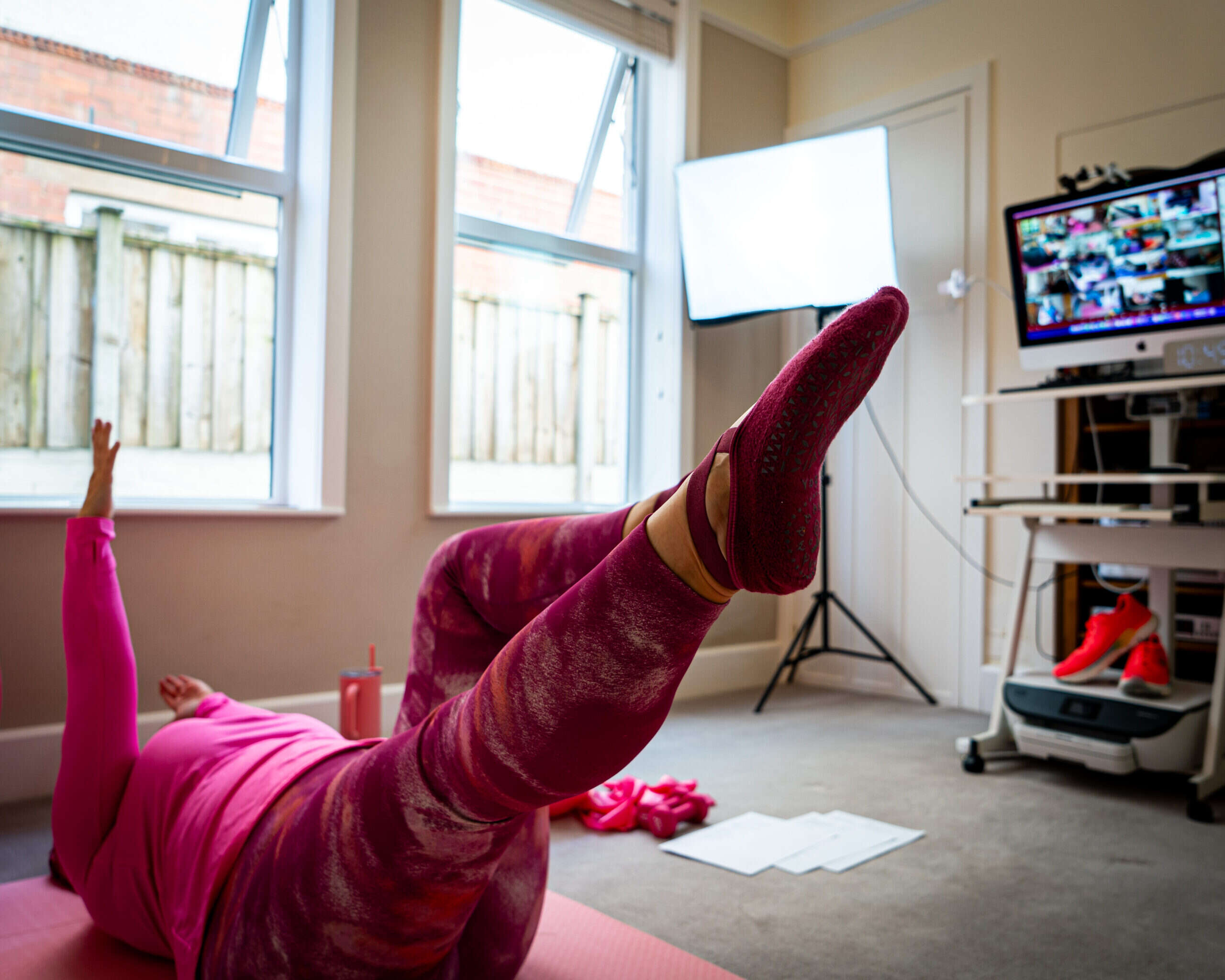
It’s one of the traditional Pilates mat exercises you may have spotted Joseph Pilates performing in the earlier video. In its traditional form, several things are happening at once – the legs alternate while the upper body is lifted and the arms move into their traditional position. But we don’t have to start there. We can take the exercise apart and gradually build its different elements:
- Leg slide — explore the leg movement while keeping the foot in contact with the floor.
- Single leg extension — begin to lift and extend one leg before returning it.
- Tabletop leg extension — work from tabletop, extending one leg at a time.
- Alternating leg stretch — develop the continuous alternating movement.
- Add the arms — introduce the traditional arm and hand position.
- Add the chest lift — bring the different elements together to explore the traditional Single Leg Stretch.
Watch Suzanne demonstrate how Single Leg Stretch can develop from a simple leg slide into the traditional Pilates exercise:
You might find that an earlier option gives you exactly the challenge you need. You might move through several stages. Or you might usually perform the traditional exercise but decide that today your body would benefit from returning to one of the earlier versions.
There isn’t a finishing line.
The purpose of offering different options isn’t to get everybody to the final exercise eventually. It’s to help you understand what you’re working towards, recognise the choices available to you and find a way of moving that works for your body.
That’s Mixed Ability in action: moving together, but not necessarily moving in exactly the same way.
The Benefits of Mixed Ability Pilates
Mixed Ability Pilates can help you:
- Build strength and core stability
- Improve mobility and flexibility
- Develop balance and coordination
- Improve posture and body awareness
- Develop control and movement quality
- Build confidence in adapting movement for your own body
- Enjoy a varied, flowing Pilates practice
And because there are always different ways to explore a movement, the class can continue to offer something new as your Pilates practice develops.
How to Prepare for Mixed Ability
You don’t need lots of specialist equipment to take part in Mixed Ability. For most sessions, it’s useful to have:
- An exercise or Pilates mat
- A small cushion or folded towel for additional support
- Something comfortable to support your head — and yes, a Squishmallow is absolutely allowed!
- A sturdy chair or wall nearby if you’d like additional support
- Water and comfortable clothing that allows you to move freely
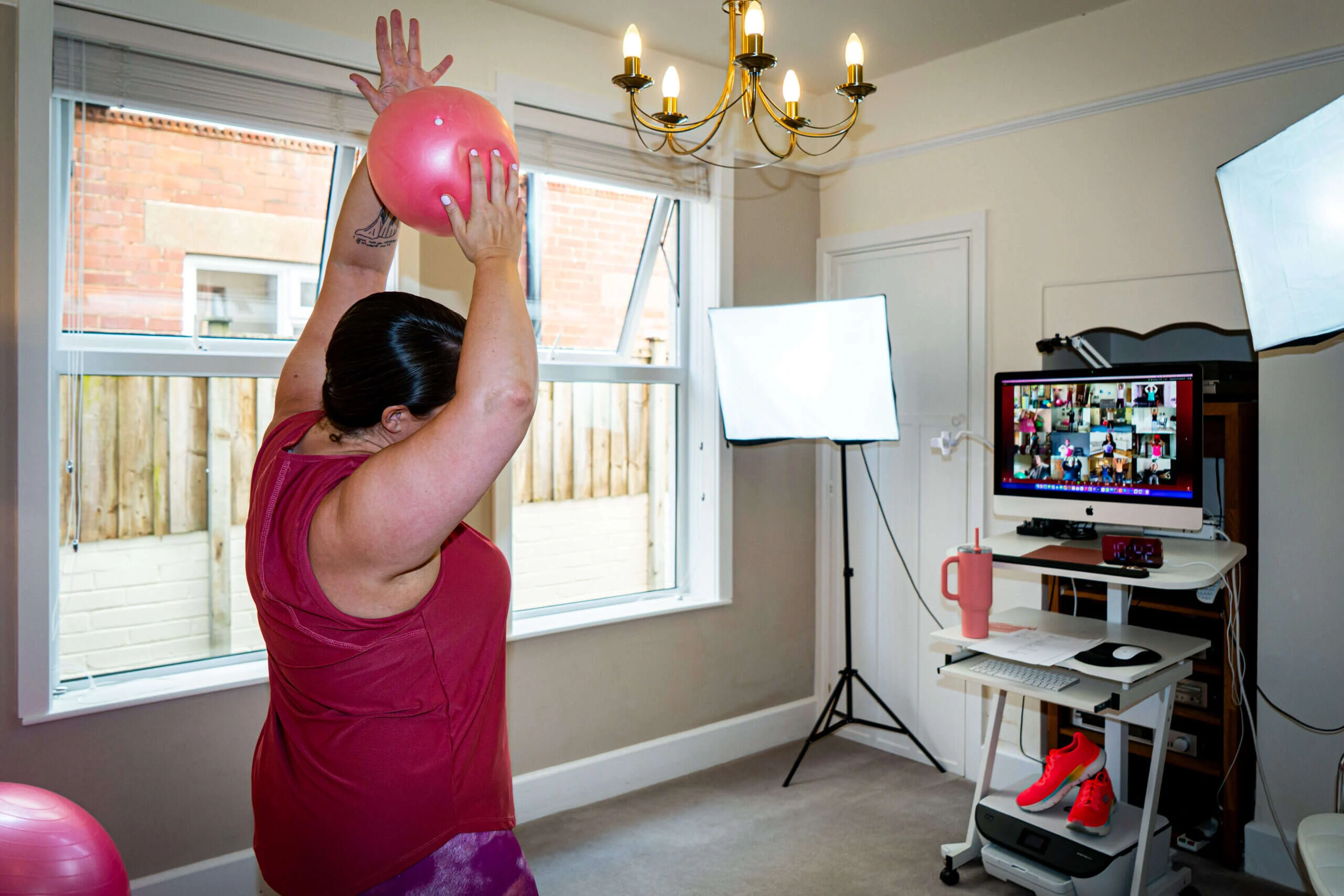
Some classes may also use equipment such as a small Pilates ball, resistance band or light hand weights. You’ll be told if anything particular is needed, and household alternatives can often be used.
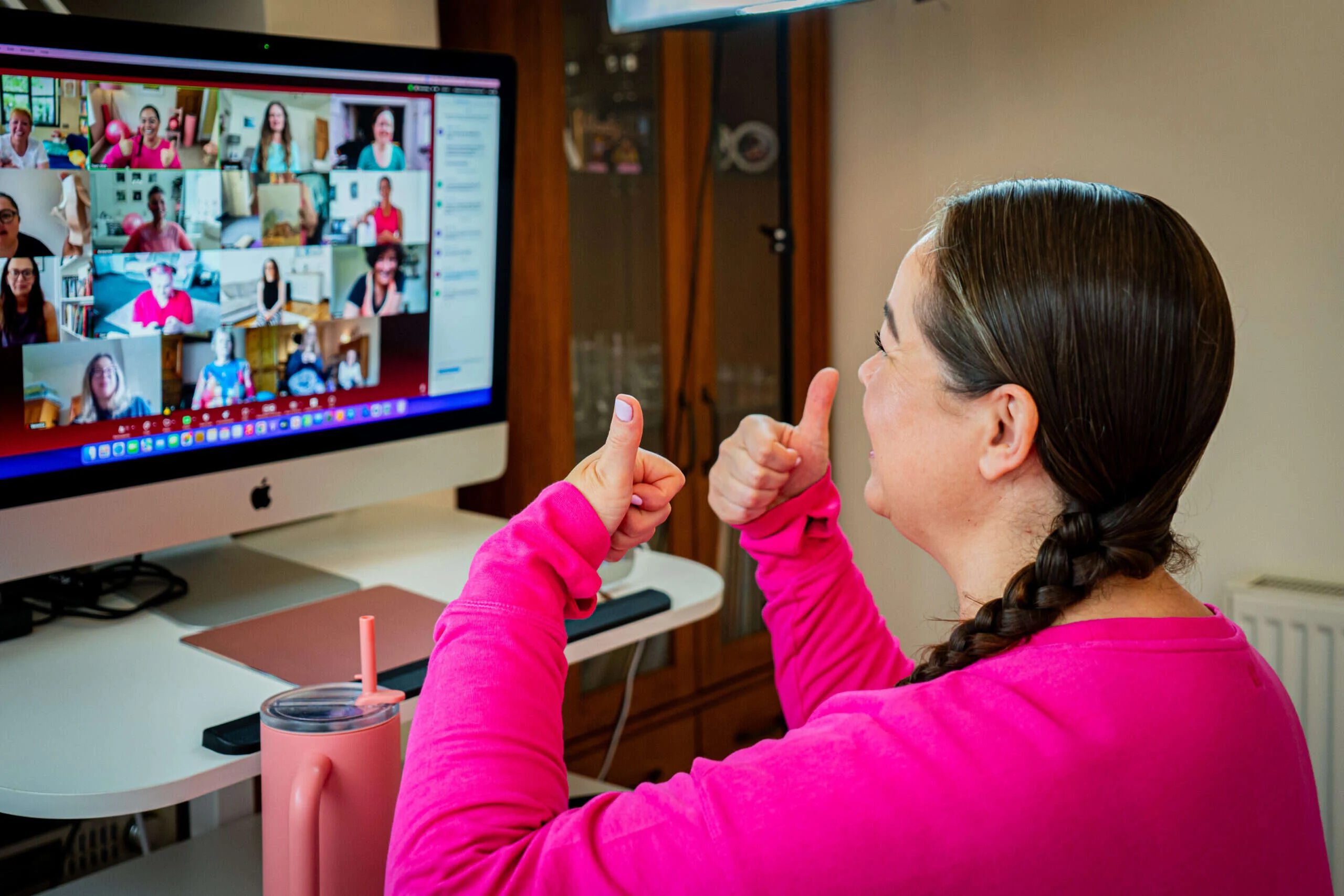
For an online class, position your device somewhere stable where you can see and hear your instructor clearly, with enough space around you to move comfortably.
Most importantly, bring your own body and your own starting point. You don’t need to arrive ready to perform every Pilates exercise — that’s what the different options are there for.
Final Thought
Mixed Ability Pilates isn’t about deciding whether you’re a beginner, intermediate or advanced participant. It’s about recognising that movement isn’t quite that simple.
You can have years of Pilates experience and still benefit from returning to the foundations. You can be new to Pilates and discover that some movements feel surprisingly natural. And you can perform an exercise one way one week and choose a completely different version the next.
That’s part of learning to understand your own body.
For me, a successful Pilates class isn’t one where everybody reaches the most advanced version of every exercise. It’s one where people feel confident enough to explore, make choices, challenge themselves when it feels appropriate and adapt when it doesn’t.
Pilates has changed considerably since Joseph Pilates first developed his method, but the focus on controlled, purposeful movement remains.
Mixed Ability takes those traditional roots and brings them into a modern Mobilates class – giving everyone the opportunity to make Pilates their own.
Try Mixed Ability
Want to experience Mixed Ability for yourself?Join Leanne for this Back to Foundations Mixed Ability class, where familiar Pilates movements are explored with a focus on positioning, control and movement quality.
It’s also a great reminder that going back to the foundations doesn’t mean going backwards – wherever you are in your Pilates practice, there’s always something to explore.
Choose the options that work for you, pause whenever you need to and enjoy moving with us.
Try Leanne’s Back to Foundations class below:
Ready to Join Mixed Ability?
If you’d like to explore traditional Pilates with a modern Mobilates twist, come and join us for a Mixed Ability Pilates class.
Whether you’re relatively new to Pilates or have been practising for years, you’re welcome to work at your own level, explore the different options and make the class your own.
Book your next Mixed Ability class through the Mobilates timetable below:
Come and discover Pilates that gives you the freedom to move, explore and choose what works for you.
Ready to Try a Class?
Mobilates offers a range of online Pilates and movement classes via Zoom, supporting people with long-term health conditions, reduced mobility, and anyone looking to improve strength, mobility, and confidence through safe, accessible exercise.
Already a member?
Book your online Mobilates classes here.
New to Mobilates?
Then you can book your free online Mobilates trial here..
Other Blogs in this series:
Strong & Stead Bed/Mat Pilates
Mobilates CIC provides inclusive, adapted exercise for people living with long term health conditions, chronic pain, fatigue and disability.
We create safe, welcoming spaces to move, connect and build confidence in what your body CAN do, whether you join a class in person, online, or from your bed. We’re led by lived experience and powered by community. Together, we’re redefining what movement can look like.
💗 Join Da Mob: www.mobilates.com
📧 Get updates: Subscribe to our newsletter for gentle inspiration, community stories, and upcoming events.